Search This Blog

Wednesday, June 22, 2016

My COYER Summer Vacation Starts NOW!!


I am going to try something new this summer!  There is a reading challenge called COYER Summer Vacation, and I am in!  The idea is to read and review as many of my e-reads as possible this summer, and maybe even win some prizes.

This sounds like a wonderful group of people involved in reading and reviewing and I can hardly wait to get started. In fact - I think I will link the review I just completed so I can start today.

Wednesday, June 15, 2016

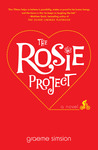
The Rosie Project by Graeme Simsion - sweet love story of odd ducks


The Rosie Project (Don Tillman, #1)The Rosie Project by Graeme Simsion
My rating: 4 of 5 stars

Australian geneticist Don Tillman has determined he needs a wife. But, Don has never been particularly comfortable with women, or men for that matter. He has difficulty making friends and is a little off when it comes to the niceties of society. He has very specific ways of doing things, and it is not easy for him to change. In fact, Don determines, it might be a good idea to lay out the things he does not want in a woman and put together a questionnaire.

The more Don thinks of this questionnaire, the more he likes the idea. It will very efficiently alert him to women that are not suitable, and some of the questions alone may discourage women who are inappropriate as a mate. With the help of his friends Gene and Claudia, Don begins the Wife Project. Through a misunderstanding, Don meets a highly unsuitable woman named Rosie who he believes was recommended to him as a potential wife by Gene.

But, unacceptability as a wife does not mean he and Rosie cannot get to know each other and become friends. Don learns Rosie is the product of her mother's one night stand the night she graduated from medical school. Her biological father was at the graduation party, but Rosie's mother never told her who he was. Rosie's mother has since died and Rosie desperately wishes to learn who her biological father is, because she was left to live with her father Phil and the two have never gotten along.

As a genetics professor, Don has access to DNA testing equipment. Although highly irregular (unethical) and a threat to his job, Don offers to assist Rosie. They set out to locate all the men in her mother's graduating class and check their DNA against Rosie's.

Since Don (cough...Sheldon Cooper) appears to be somewhere on the Asperger's spectrum, it can be painful, or even hilarious, as Don attempts to find a wife while also attempting to locate Rosie's father. Rosie is herself a bit odd, but not to the extent of Don. Although both indicate they are not looking for a relationship, it just wouldn't be a story without a feasibly happy ending.

I found it somewhat insightful to consider a man whom society would deem handicapped as a romantic lead. Told from Don's perspective, there are some points he makes that are laugh out loud funny. But, there are others that are very poignant. Don is very willing to face his weak points and to practice to overcome them, but he is also very capable of demonstrating the skills he has that the average person lacks. His ability to organize and learn vast quantities of data in a short amount of time is amazing. However, romance is not his strong suit.

Told by Rosie that with the right haircut and suit he would be the spitting image of Gregory Peck in To Kill a Mockingbird, Don does begin to take on the trappings of the suitor. His methods are unorthodox, but by the end of the book, you will be rooting for him just as I was. A lovely story to brighten up your life.

Note: I have no experience with Asperger's syndrome, so I cannot speak to the accuracy of any of the attribute's Don exhibits. However, to be fair, the author never claims Don has the syndrome, he just very broadly hints at it. I have read other's concerns that this story mocks those with the syndrome.  I just don't believe the author could come up with such a lovable character
as Don if he was doing so.


View all my reviews

Friday, May 6, 2016

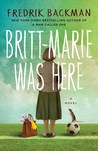
Britt-Marie Was Here by Fredrik Backman 5 Star coming of age story of a 63 year old woman.

Britt-Marie Was HereBritt-Marie Was Here by Fredrik Backman
My rating: 5 of 5 stars

Britt-Marie was here is a coming of age story. What makes it unusual is that Britt-Marie is 63 years old. But, still, this is a story of Britt-Marie's coming of age.

Kent, Britt-Marie's husband, has had a heart attack. Britt-Marie knows this because Kent's mistress has called to tell her. After playing the dutiful wife for 40 years, Britt-Marie decides it is time to start a new life.

Of course, a new life requires money, and Britt-Marie needs a job. The girl from the unemployment office makes the mistake of telling Britt-Marie she will call her when a job comes up that she feels will work for her. But, Britt-Marie is not the kind of person to wait. She wants to know when. When she has not received a call 5 minutes after the office opens the next morning, she calls to see what they have found for her. In desperation, she is offered a job that will only last a few months. It is as the head of a recreation center which needs a caretaker until it can be closed in a couple of months. Britt-Marie accepts and heads to Borg.

Everything has closed down in Born, except the recreation center, which is to be closed, the pizzeria, which is attached, the post-office, which is the pizzeria, and the car repair shop, which is also the pizzeria. In addition, the pizzeria is the local grocery store. Everyone in Borg seems down and out since the trucking company, the major employer, fired everyone. Even the rat at the recreation center seems lonely.

But, Britt-Marie has standards. There are certain things she does and has done them all her life. Britt-Marie follows the rules, cleans, straightens, and ensures she never appears to be a criminal to her neighbors. Borg has never seen the like of Britt-Marie. But, both Borg and Britt-Marie don't know what hit them.

The bottom line in Britt-Marie was Here is that Britt-Marie has not jumped toward anything in her life since her older sister died when Britt-Marie was a little girl. She has lived her life cautiously, carefully, neatly, and cleanly. She doesn't jump, she carefully and logically takes reasonable actions. But, there are people in Born who do not appreciate reasonable actions and keep pestering Britt-Marie to jump. These are people in pain, living in a town that would have been forgotten if people were not so insistent in shutting things down. Borg needs Britt-Marie, but she is not so sure this is a good thing. Slowly, soccer seeps itself into her life and she, shockingly, finds this matters to her and to the people of Borg.

A lovely, strange, but moving story of a woman who has lived a sheltered life that has prevented her from becoming a whole person. In the end, Borg and Britt-Marie will never be the same. And, all due to a small, leather ball, that helps to sooth the pain.


View all my reviews

Monday, April 11, 2016

The Geography of Madness - Author should have remained objective 2 Stars


The Geography of Madness: Penis Thieves, Voodoo Death, and the Search for the Meaning of the World's Strangest SyndromesThe Geography of Madness: Penis Thieves, Voodoo Death, and the Search for the Meaning of the World's Strangest Syndromes by Frank Bures
My rating: 2 of 5 stars

I received an advance reader copy from Edelweiss/Above the Treeline, but discovered when reading that I was only given the first chapter. I have to say that I was very interested in reading this title, but not so much after reading the first chapter. My anticipation was that the author would remain objective, but I found in the first chapter that he was becoming personally involved in the madness and convinced there was something real in the penis thief situation. I am sure the author was sincere, but I am not comfortable with the author adding to the madness rather than simply reporting. I agree that to look down upon the believers as being ridiculous is not an effective method of reporting either, but I do not agree to the subjective method of reporting he has chosen. This is not a title I would recommend my library system purchase unless requested by a patron.

View all my reviews

Sunday, April 10, 2016

The Summer Before the War by Helen Simonson - Beautiful and Horrible


The Summer Before the WarThe Summer Before the War by Helen Simonson
My rating: 5 of 5 stars 

I loved Helen Simonson's "Major Pettigrew's Last Stand" and looked forward to any additional books coming from her. I was not disappointed with "The Summer Before the War" although the stories are so totally different. Yet, they are both very British and contain some similar themes, specifically about class and racial distinctions. But, more importantly to me as a reader, they touched my heart and asked me to once again think of people first as human beings rather than as the positions they hold in society.

Beatrice Nash has recently lost her father and her financial independence, making employment a necessity. She has arrived in Rye to become the new Latin teacher at the local school. As the era is just as World War I is on the horizon, Beatrice is quite at a disadvantage. Not only is she an outsider, but as a woman, Latin is the last subject she would be expected to take on. Her position is, therefore, a bit perilous as the posting is still controversial amongst the influential of Rye.

Luckily Miss Nash has the support of two very influential women, Mrs. Agatha Kent and Lady Emily Wheaton. Both of these strong women are teetering between the old ways of subjugating women, and the new of providing women with opportunity. Beatrice does not fully understand how these women have put themselves on the line for her, but she soon begins to see she is not welcome by everyone, and Agatha, in particular, is fighting to maintain her position in the community. Agatha is also a woman of very strong love for her husband, John, her two nephews and for her community and country.

Now, slowly, we are introduced to other members of the local society as Miss Nash becomes known to them. We meet Agatha's nephews, Hugh Grange and Daniel Bookham. Hugh is just starting his career as a doctor - a surgeon with a strong interest in head injuries. He has recently started an apprenticeship with renowned surgeon Sir Alex Ramsey, and is well into a promising relationship with Dr. Ramsey's daughter, Lucy. Daniel is quite the opposite. His passion is poetry and he is quite the bohemian, with very subtle hints of a possible preference for his friend Craigmore. He is being pressured to take a civil service job with his uncle John Kent, Agatha's husband, but is more inclined to escape to Paris to spend his life immersed in art and poetry. In sympathy with their aunt, both men determine they will support Beatrice against the nay-sayers. Being just slightly naive, Beatrice has come to Rye believing her qualifications for teaching are all that is necessary. However, she soon sees how fragile her position and reputation can be and realizes she must be on guard.

In addition, there are a few more vital characters to add to the list: Snout, or Dickie Sidley as he is known to those less friendly, is a local gypsy teen who has talent and great hopes for a Latin scholarship with Miss Nash's assistance, but is hampered by being a Romany; Mr. Tillingham, the local celebrity author, who holds subtle sway over the community and brings to Rye Belgian refugees looking for safety after the terrible loss of their homeland to the Germans - this includes the Professor and his daughter Celeste; Mrs. Turber, Beatrice's landlady, and many others including the snobby women of Rye, the Headmaster and staff of the local grammar school to which Beatrice has been hired, Lady Emily's family the Wheaton's, etc., etc.

Into all of their lives crashes the beginning of the war as duty takes the men away to the trenches and the women stay behind to fight the war from home. Now the story begins to show us the reality of life in Beatrice's world and the depth of each character as they are all tested in one way or another. Honor and duty, cruelty and inhumanity, prejudice and sacrifice, are all demonstrated in one way or another by the people of Rye who have all become major players in Beatrice's life. The war brings love, compassion and loss to many, including Beatrice, as they see the old ways no longer relevant, yet fight to maintain class distinctions and prejudices against those who are different. In the end, it is love, family and friendship that matter most and bring the moments of joy and peace into their lives.

This is a beautiful and horrible story of the best and worst of humanity. I can see why some reviewers could not like many of the characters, as many of them were not likable. I found the characters and the story a realistic view of what life was like in a small town prior to the war, and the changes brought about by the horrors of war. Not all successfully pass the test, and many are lost either to death or the deaths they have brought about. But, Rye survives, as do the families and friends who have suffered and sacrificed or added to other's pain. There is a future and a hope, as well as continued struggle to make the world better.

I strongly recommend "The Summer Before the War".


View all my reviews

Thursday, April 7, 2016

My Top Ten Agatha Christie Novels - PART I

I just saw an article posted on Facebook by my friend Heidi, who is also a librarian.  It was from the Strand Magazine and lists the author's favorite Agatha Christie titles.  Well, I just couldn't let that stand.  I have to answer with my favorites.  Why - well, because!

Over the years I have read everything Agatha Christie has written, most of them several times.  The one regret she said she had about her characters was that she made them old from the beginning.  Her very first title, The Mysterious Affair at Styles, introduces us to Hercule Poirot, a retired Belgian police detective.   This funny little man with the big mustache became one of her greatest creations. But, he was certainly an old man.  And, Miss Marple was an elderly woman.  This set limits to Christie's stories that I am sure she never anticipated.  Later, she introduced us to characters like Tommy and Tuppence who were in their early twenties, and Mr. Parker Pine, a man in his prime.  This gave her the latitude she needed to add in some action along with the "little grey cell" activity of her older sleuths.  However, for me, the best stories were told with Poirot or Marple.

One very interesting aspect of Christie's writing was outlined in a documentary I saw many, many years ago.  I attempted to locate it online, but I was not successful.  Scientists in the film tested the brain waves of a person while reading an Agatha Christie book and were very shocked to find it matched that of a person on an addictive substance.   They retested this and found it was consistent with most readers of Christie novels, but not with readers of any other author.  There is an actual addictive aspect to reading Agatha Christie.  That explains a lot!

But, let's get down to my list of the top ten novels written by Agatha Christie.  I will be numbering them down from number 10 to my favorite at number 1.  All descriptions are taken from the GoodReads website.  Here they are:

Evil Under the Sun (Hercule Poirot, #23)
10.  Set at the Jolly Roger, a posh vacation resort for the rich and famous on the southern coast of England, Evil Under the Sun is one of Agatha Christie’s most intriguing mysteries. When a gorgeous young bride is brutally strangled to death on the beach, only Hercule Poirot can sift through the secrets that shroud each of the guests and unravel the macabre mystery at this playground by the sea.
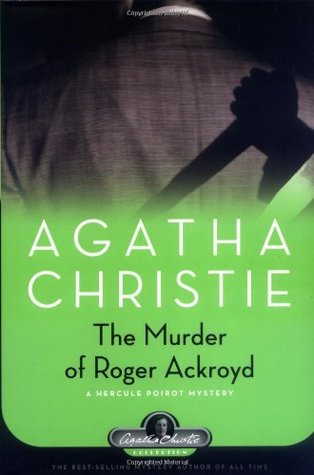
The Murder of Roger Ackroyd (Hercule Poirot, #4)
9.  In the village of King's Abbot, a widow's sudden suicide sparks rumors that she murdered her first husband, was being blackmailed, and was carrying on a secret affair with the wealthy Roger Ackroyd. The following evening, Ackroyd is murdered in his locked study--but not before receiving a letter identifying the widow's blackmailer. King's Abbot is crawling with suspects, including a nervous butler, Ackroyd's wayward stepson, and his sister-in-law, Mrs. Cecil Ackroyd, who has taken up residence in the victim's home. It's now up to the famous detective Hercule Poirot, who has retired to King's Abbot to garden, to solve the case of who killed Roger Ackroyd--a task in which he is aided by the village doctor and narrator, James Sheppard, and by Sheppard's ingenious sister, Caroline.

The Murder of Roger Ackroyd is the book that made Agatha Christie a household name and launched her career as a perennial bestseller. Originally published in 1926, it is a landmark in the mystery genre. It was in the vanguard of a new class of popular detective fiction that ushered in the modern era of mystery novels


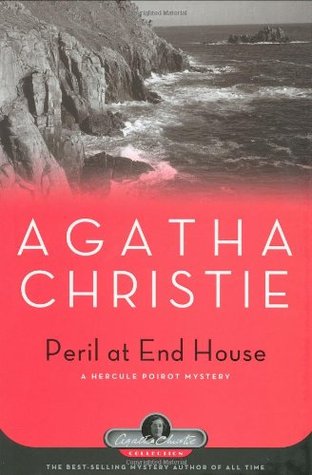
Peril at End House (Hercule Poirot, #8)
8.  Hercule Poirot is vacationing on the Cornish coast when he meets Nick Buckly. Nick is the young and reckless mistress of End House, an imposing structure perched on the rocky cliffs of St. Loo. 
Poirot has taken a particular interest in the young woman who has recently narrowly escaped a series of life-threatening accidents. Something tells the Belgian sleuth that these so-called accidents are more than just mere coincidences or a spate of bad luck. It seems all too clear to him that someone is trying to do away with poor Nick, but who? And, what is the motive? In his quest for answers, Poirot must delve into the dark history of End House. The deeper he gets into his investigation, the more certain he is that the killer will soon strike again. And, this time, Nick may not escape with her life.
Crooked House
7.  The Leonides are one big happy family living in a sprawling, ramshackle mansion. That is until the head of the household, Aristide, is murdered with a fatal barbiturate injection.  Suspicion naturally falls on the old man’s young widow, fifty years his junior. But the murderer has reckoned without the tenacity of Charles Hayward, fiancĂ© of the late millionaire’s granddaughter.


CONTINUED IN PART II

http://barblibrarianadultbooks.blogspot.com/2016/04/my-top-ten-agatha-christie-novels-part.html


My Top Ten Agatha Christie Novels PART II


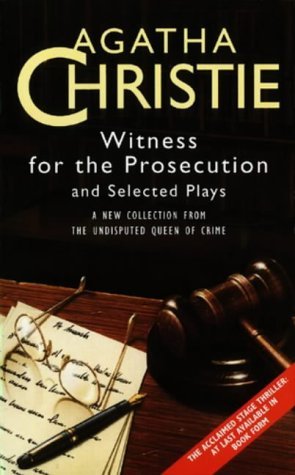
 6.  Witness for the Prosecution, Agatha Christie's highly successful and award-winning stage thriller, opened in 1953 to spectacular reviews. It went on to become an acclaimed feature film, nominated for six Academy Awards. In a stunning courtroom drama, a scheming wife testifies against her husband during a shocking murder trial...  This special 50th anniversary edition comes complete with three other mysteries, demonstrating Agatha Christie's mastery of the crime genre in theatre as well as books.


Murder at the Vicarage (Miss Marple, #1)

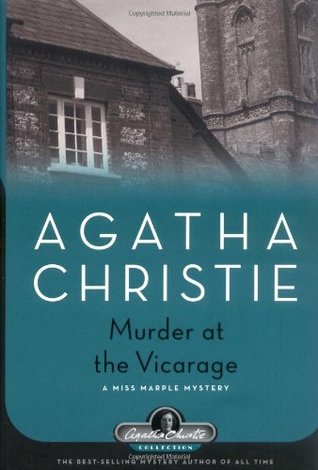
5.  Murder at the Vicarage marks the debut of Agatha Christie’s unflappable and much beloved female detective, Miss Jane Marple. With her gift for sniffing out the malevolent side of human nature, Miss Marple is led on her first case to a crime scene at the local vicarage. Colonel Protheroe, the magistrate whom everyone in town hates, has been shot through the head. No one heard the shot. There are no leads. Yet, everyone surrounding the vicarage seems to have a reason to want the Colonel dead. It is a race against the clock as Miss Marple sets out on the twisted trail of the mysterious killer without so much as a bit of help from the local police


Sleeping Murder

4.  It was an open and shut case. All the evidence said Caroline Crale poisoned her philandering husband, a brilliant painter. She was quickly and easily convicted and sentenced to life in prison. 
Now, sixteen years later, in a posthumous letter, Mrs. Crale has assured her grown daughter that she was innocent. But instead of setting the young woman's mind at ease, the letter only raises disquieting questions. Did Caroline indeed write the truth? And if she didn't kill her husband, who did?  To find out, the Crale’s daughter asks Hercule Poirot to reopen the case. His investigation takes him deep into the conflicting memories and motivations of the five other people who were with the Crales on the fatal day. With his keen understanding of human psychology, he manages to discover the surprising truth behind the artist's death.

Peril at End House (Hercule Poirot, #8)
3.  The owner of a seaside villa is plagued by strange feelings about its past…  Soon after Gwenda moved into her new home, odd things started to happen. Despite her best efforts to modernise the house, she only succeeded in dredging up its past. Worse, she felt an irrational sense of terror every time she climbed the stairs…  In fear, Gwenda turned to Miss Marple to exorcise her ghosts. Between them, they were to solve a ‘perfect’ crime committed many years before.


Murder on the Orient Express (Hercule Poirot, #10)

2.  One of Agatha Christie’s most famous mysteries, Murder on the Orient Express was inspired by two real-life crimes and the author’s own experience being stranded on the Orient Express during Christmas of 1931. While traveling to Paris, a wealthy American is stabbed to death in his cabin on the Orient Express. With the train stuck in a snowdrift, there is no easy escape for the killer. Fortunately, detective Hercule Poirot is aboard and launches a clever investigation into the curious assortment of passengers, of whom each seems to have a motive.
And Then There Were None

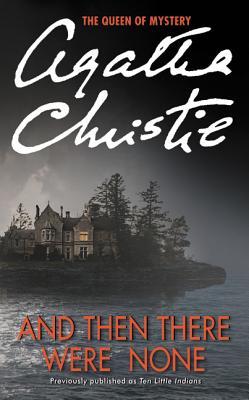
1.  My very favorite, and no movie has shown the ending as it occurred in the book.
So strange.


"Ten . . ."
Ten strangers are lured to an isolated island mansion off the Devon coast by a mysterious "U.N. Owen."
"Nine . . ."
At dinner a recorded message accuses each of them in turn of having a guilty secret, and by the end of the night one of the guests is dead.
"Eight . . ."
Stranded by a violent storm, and haunted by a nursery rhyme counting down one by one . . . one by one they begin to die.
"Seven . . ."
Who among them is the killer and will any of them survive?